Showing posts with label Ashtanga. Show all posts

Tuesday, December 7, 2010

How do you do it?

“Good for the body is the work of the body, good for the soul the work of the soul, and good for either the work of the other.” 
~Henry David Thoreau
I recently met a fellow ashtangi who is also a first year medical student in New York. She asked for advice on keeping up a yoga practice during medical school… and I need help coming up with a good answer.

How does ANYONE keep up a yoga practice through sleep deprivation, stress, exhaustion, emotional highs and lows (be it from graduate school, a demanding job, a break-up, new motherhood, etc)? It’s during these times that we especially need to make time for a daily practice. 

Here are some things that helped me maintain some sort of yoga practice over the past few years... it’s a list I’ll have to keep adding to as I have to figure it out all over again next year as an intern:

  • Get up in the early morning for a home practice. No matter how early! If you have to be at the hospital at 5:30, get up at 3:30... you may be tired at first but it will transform the rest of the day.
  • Make a little cup of coffee before practice. After such sleep deprivation I would honestly not have been able to practice without this.
  • Do a long practice at a studio on your days off. This makes all the difference! A home practice is really hard to maintain and having a weekly "tune-up" with a teacher/ yoga community is key.
  • Find like-minded friends. It may take a while to find them but they are out there! Crank up the heat and practice together at home (especially when the studio is closed). Do “partner yoga” sessions and experiment with new things.
  • Listen to your body and do the practice you need. Some days just sit, some days focus on second series, some days do more backbends or inversions... know what you need.
  • Take staycations. When you do get some precious vacation days, spend some time at home doing yoga, sleeping, eating well. Staycations are the best vacations :)
  • Do weekend workshops when possible. Take advantage of teachers when they come to you (you can learn a lot during one intense weekend).
  • Don't hide your yoga practice from your other worlds. This is what I did for the first couple years of medical school (not sure where this came from – I guess I was afraid of what people would think), but by my 3rd year I stopped hiding it. I realized there are LOTS of people out there who do yoga or want to do yoga... so keep writing, talking, sharing, and build up the yoga community around you! 
That's all I have for now, but I really want to hear what's on your list… how do you do it?

Home practice with Caitlin (medicine intern) and Mariana (soon to be medical student!)

Saturday, November 20, 2010

Interview with David Garrigues

David took the time to answer some questions and I’m very happy to share them here with you here… enjoy!
Certified Ashtanga yoga teacher, David Garrigues

How did you first learn about yoga?

I was sixteen and working as a bus boy. The dishwasher was really into metaphysics, supernatural phenomenons, UFO's, conspiracy theories, etc, and one day he told me about Yoga. That afternoon he took me to the local park and showed me Surya Namaskara. From that point on I was practicing Sun Salutations.


Tell us about the path your yoga practice has taken. 

In 1991 I placed 4th in the Seattle Marathon after training rigorously for a few months and my body became completely tight and so I went to an Iyengar Yoga class. I got hooked and started going everyday. Eventually, I found two important teachers who lit the fire of Yoga in me and helped me to choose to make Yoga my life path. Then in 1993 I saw a video of Pattabhi Jois teaching his students (Freeman, Chuck and Tim) and saw in the Yoga Journal that he was coming to LA. I went and studied with him for one month. Then in '94 I went to India and was there almost continuously for two years. At the end of that time Guruji certified me. I went back to Seattle and for ten years ran the Ashtanga Yoga School always returning to India nearly one or twice a year to work with Guruji.

On one of my first visits to India I discovered singing and started practicing Bhakti Yoga by way of music. I now consider myself a practitioner of both Bhakti and Hatha Yoga.

For the past few years, I have started to make a more organized and conscious choice to share what I'm learning through social media: dvd's, cd's, and blogging. All of these media outlets are pushing me to go deeper into teaching as a service and to share what I have been given. And that's where I continually see my future leading, continuing to practice, study and share what I'm learning.


Who have been your greatest yoga teachers and why?

Marie Svoboda, who taught me about the process of going into an asana and that what is most important is the process not the end. She also taught me about rhythm. 

Aadil Palkhivala, who still teaches in Seattle. He is a senior Iyengar teacher and taught me to think creatively and therapeutically about the body. And how to endlessly refine an asana. He also taught me how to appreciate when a magical atmosphere arises in a class. 

Ramanad Patel, who teaches workshops worldwide and taught me about combining Bhakti Yoga and asana work in a class. 

Pattabhi Jois, who taught me everything... how to stand on my own and how to be a complete anchor. And how to be yourself. And how much power we each have. Guruji wasn't playing around or putting on an act. 


What motivates you to practice every day? 

How much better I feel when I practice. And how alive I feel. And how I can finally feel my life force really flow. And the mental places that I go when I practice. The concentration that I can achieve. And also the physical benefits. 


Why do you practice Ashtanga yoga? 

Because Ashtanga Yoga is the only type that can adequately allow me to work with my energy the way that feels right to me. I like how physical it is. I also like the concept of Vinyasa and how working with patterns of the breath is the center of the practice.


What is your daily routine like?

I am always busy and doing things. I don't like to feel that I'm wasting my life. I don't consciously keep a schedule but my day is always consistent. If I have to teach Mysore class I wake up at 4AM and practice. Sometimes I can squeeze in some classic Indian scales. I teach at 7AM and when I'm through I go home and eat a whole grain breakfast (sweet brown rice cream, oatmeal, cream of wheat.) Then I either sing again or I begin my writing for the day. At this time I am also double tasking by cooking a macro meal (pressure cooking brown rice, slow cooking vegetables, burdock, Kimpira). But either way I will be singing or writing until I eat at 3PM. This is when I usually take a two hour break. A break usually involves some reading, a cat nap or helping my partner Joy on her film projects. But at around 5PM I start revving up again, answering emails, sometimes Joy and I will film, but most days I'm writing until its time to sleep at around 10pm. I don't need a lot of sleep, never have.


Tell us about your diet.

I practice a wide macrobiotics. Because I'm not sick so for me the macro diet does not need to be narrow. But I also have a Yin disposition and therefore, am inclined towards Yin foods (sugar, alcohol, caffeine) so I have to be very conscious to eat the Yang foods my body needs in order to be balanced. The most hearty Yang foods are short grain brown rice, burdock, turnip, daikon, carrots, and then cooked for hours. One of the things I love about the macro diet is that you do put a lot of energy into making the food but in the end you have an amazingly tasty and healthy dish. Its not like you spend hours in the kitchen making Fettucine Alfredo, where the result is tasty food, but also super high in fat. 


What are 3 pieces of advice you would give serious yoga practitioners about their diet?

I've said it before: The diet is the final frontier for a Yogi. Its a lot easier for people to acclimate to waking up and going to bed earlier, or being more physically tired throughout the day, but eating a proper diet is really challenging. My advice is more on how to transition into a healthier diet.

#1 Be kind to yourself when your transitioning into a healthier diet. This is where most people have trouble. If you start off too extreme… cutting out everything you enjoy and just eating brown rice and turnips, you will probably not hold the diet. It takes a long time to change your diet so transition slowly. In the beginning eat the occasional slice of cheese and slice of cake.

#2: Get onto whole grains. Buy a pressure cooker and a grain meal and learn to use them. The food tastes a whole lot better.

#3: Most importantly, make a very careful study of how the food you eat affects your practice. You really have to study this because you want to have an optimum practice each day. This means you have to feel when your body system and digestion is ready to practice. So when your practicing take note of how you feel and what it was that you ate yesterday. And then if you observe carefully and long enough your practice will teach you what you need to eat.


What advice do you have for people interested in starting a yoga practice? 

I'm biased but I think that Ashtanga is the best practice. And the way to learn Ashtanga is to find a teacher who teaches Mysore. Sign up for the month and follow their instruction. If you can't get access to a teacher then a dvd can do it. Also, make an intention within yourself to honor your body. If you want to start a Yoga practice you need to realize that Yoga is a large path. There's a lot to it. Its a discipline that takes several years to understand and get established in, and in the beginning, you don't have to understand very much of it. You only have to make a start. Start small and simple and see how you feel and see where that takes you. And continue to feel what's happening and value what you feel. Don't do too much too soon. And be careful not to get swept away by your ego trying asanas that your body is not ready for because you can get hurt.


What advice do you have for people with busy schedules who must maintain a home practice? 

1: Have a consistent time that you practice.

2: If you only have the energy to do ten minutes, five minutes, one Sun Salutation, then just do that. Again, you have to be kind to yourself. Because that one sun Salutation will carry you onto the next morning when you may feel like doing the entire Primary.


How has your practice changed over the past 10 years? 

My body has aged. I've slowed down some. I value breathing and simplicity much more. My focus is way deeper, way more subtle, as well as my breath. I still love practicing but for very different reasons. Now, I love the very moment that it's happening rather then what I'm going to get out of it when I'm done. 


How do you see your practice changing over the next 10 years?

I don't know what's in store and I'm happy about that. I only know that I will be doing it and it's bound to get deeper and take me to new places that I've never gone. And I'm excited about that. 


What is your biggest fear?

I tried to just think of one but this is what came out: That for whatever reason people can't relate to my experience. That I haven't gone deep enough. That I haven't applied myself enough. I'll run out of time before I've gotten the chance to really find my wisdom. That I can't face and accept my ugliness and join in healing around that.


Who have been the most influential people influencing your health habits?
  • Pattabhi Jois 
  • Marie Sbavoda 
  • Macrobiotic teachers (AnneMarie Colbin, Herman Aihara, Michel Abehsera)
  • My mom 
  • Jung 
  • Patanjali 

If you could tell a room of thousands of people one piece of life advice, what would it be? 

You have an incredible reserve of life force within you that is meant to be positively channelled to heal yourself and the world. So face whatever demons that block you and use your power to heal and move life forward.


What do you wish you could go back in time and tell your 25-year old self?

Don't be afraid. You have so much power and so much talent just go for it.

Friday, November 19, 2010

Traveling yoga

It’s especially important for me to keep up my yoga practice while traveling... the busier and more exhausted I am, the more I need it.

Two solutions I’ve found for doing yoga while traveling far from my yoga home: 1) checking out local yoga studios when possible (not always possible), and 2) carrying with me a yoga DVD (always possible). 

I've recently been carrying David Garrigues’ Ashtanga Yoga DVD. David moved to Philly over a year ago and has had a huge influence over my practice -- breath, bandhas, food, jumpbacks, handstands, backbends, taking rest when I need it. Check it out: 

The DVD has a led primary (perfect to do at home or in a hotel room with the heat cranked up), a second led primary with more detailed instructions on postures and modifications (great for new students), and an added bonus are short video-interviews with some answers to questions I've always wondered about, for example: 
  • Is Ashtanga yoga aimed towards young and healthy people? “Anyone any age can do this practice, but depending on your strength, your age, your commitment, your kinesthetic awareness of your body, your time, how much you work, what kind of things you have going on in your life… you’ll have to modify and adapt and make the practice your own.” 
  • Does the strict traditional Ashtanga yoga practice blunt our creativity and individuality? “We do set sequences and so it’s all laid out and all mapped out. And yet, within that, every person creates their own practice… You learn your own style… you access your potential and creativity.” 
  • How does the Ashtanga yoga practice change over time? "The practice is going to change. There are so many different ways it can change: It can be a wave, it can be a struggle, it can be ascending and soaring, it can be a circle, a spiral, it can plateau, it can feel like its going down and staying down, but then it’ll go back up.” 
Check back in tomorrow for a special interview with David!

Monday, November 15, 2010

Travel. Yoga. Coffee.

Hello from Seattle!!! I'm here attending a great primary care research conference, meeting lots of people and lots of ideas. 

I love this quote and think about it whenever I travel:
"Traveling is a brutality. It forces you to trust strangers and to lose sight of all that familiar comfort of home and friends. You are constantly off balance. Nothing is yours except the essential things - air, sleep, dreams, the sea, the sky - all things tending towards the eternal or what we imagine of it." ~Cesare Pavese
For me, there are two additional essentials that I cling to while traveling: yoga and coffee. Two things that help me quickly meet people and make friends in a strange city.

I love being able to fly to a new place and immediately find an ashtanga mysore community: people that speak my language! Yesterday, I went to a led primary class at the Samarya Center (amazing place and mission), and this morning to Troy Lucero’s mysore class. 


I'm still processing everything I learned with Troy this morning (he knew I only had one day there and nicely gave me a TON of attention!). Some quick notes: 
  • Standing poses: Ground my heels so much so that I lift my toes and ball of foot (I naturally do the opposite and actually lift my heels). In Utthita Parsvakonasana (extended side angle), work on barely touching fingers to the ground (engages legs, core, and bandhas much more). 
  • Navasana: Traditionally, navasana was paired with handstand, but for some reason this has been taken out over the years. They both work on the same thing: the core of the body. Practice going into handstand between each navasana.
  • Handstands: Wow we did a lot of handstand work this morning... handstands on a ramp, handstands on bars, handstands on a block, handstands on one block under one hand, handstands on sandbags. 
  • Acroyoga: Right before Kapotasana, Troy "flew" me in the air (he lay on the ground, his feet on my sacrum)... loosening up my back and quads to prep for the deeper backbends. Amazing. 
  • Tick-tocks: After backbends, he brought me over to the ramp and had me practice handstand to backbend and back to handstand. Really hard... need to find a ramp/hill at home and practice this on my own.
I love how he has toys all over the room like blocks, bars, ramps, straps, and how he encourages freedom to make the practice what you need it to be (the room was full of people doing things that I had never seen before). As he said while helping me with my handstands: "Yoga is really just about waking up." I definitely walked out of there feeling awake (and shaky, haha).

After practice and before heading back to the conference, it was time for some more Seattle coffee, which I just can't get enough of! It's the perfect way to both reminisce with old friends and connect with new ones (especially in the cozy rainy Seattle weather). 
My trip wouldn't be complete without a trip to the first Starbucks EVER!! 

Thursday, November 11, 2010

What are you learning?!

“Lack of activity destroys the good condition of every human being, while movement and methodical physical exercise save it and preserve it.” ~ Plato
Still sore… and thinking how Plato would have liked the Ashtanga yoga practice.

I’m doing the same asana practice that I’ve been doing for years, but there’s something about working with David Keil this week that’s bringing it to a new level. This is why I love having many different yoga teachers: tiny tweaks can change everything.

A few things David K has brought to my attention this week:
  • Keeping my mouth closed throughout entire practice (I thought I had been doing this but now realize I haven’t)
  • Focusing on hamstrings in the standing foundation poses (my tight hamstrings have led to some recent back pain)
  • Using my fingertips in nakrasana (This pose is so hard for me! See below)
  • Doing handstands immediately after backbends (and starting to think about going from handstand to backbend and back up to standing) 
Nakrasana
Any other Y2 people reading this: please share what you're learning! One downside to this mysore-style practice is that I can’t hear everything the teacher tells other people!

Wednesday, October 27, 2010

5 things I'm loving about practice right now

  • Pushing through. It’s really hard to get through the whole practice, but sticking with it even when I don’t feel like it helps with the thousands of other unpleasant things in life I may not feel like doing. The morning practice toughens me up for the rest of my day.
  • Not pushing through. Sometimes what I really need is to take a step back, slow down, and not do the full practice. And I really appreciate having teachers who allow for the freedom to get what I need out of practice, even if it’s different every day.
  • Running before practice. Some people in the Ashtanga tradition may frown upon this, but that will not stop me! When I do a short run before practice (or run to practice), I find that my mind is quieter, I build more heat, I move more mindfully, and I don’t feel as rushed. I think it even helps open up my hips and lower back (though I’ve heard people say it does the opposite for them).
  • Trying karandavasana. I don’t think I will ever be able to do the full version of this pose, but I still try to practice it every day. It’s a daily practice of imperfectionism.
  • New savasana practice: My med school friend Brian started practicing with us a few weeks ago, and he told me that when he lies down for savasana (final resting pose), he thinks about everything on his mind all at once... and then lets it all go. I've been trying it out and it actually leads to some milliseconds of mental silence! It’s sort of when you clench all the muscles in your body at once and let them go, you find that everything relaxes more easily.

Monday, October 25, 2010

Our net of Indra

Loved watching this Richard Freeman video about the "net of Indra" that we are all trapped in...
Video here

"As you dig into any one thing, you start to find out that it's made of everything else."

Tuesday, October 19, 2010

Digging deeper

When things get tough, it sometimes seems like the easiest thing to do is give up and move on to something else. I’ve found myself doing this in my yoga practice (as well as in other areas of my life). When in a difficult pose (or situation), I will quickly move out of it and on to the next one.

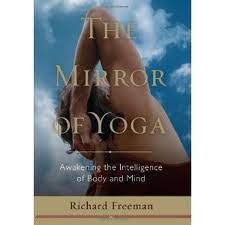
That’s why this passage from Freeman’s book, The Mirror of Yoga, really resonated with me:

There is a wonderful story about a man digging a well. He would begin digging down and after five or six feet of digging, which is very hard work, he would find no water, and so he would climb out of the little hole he had made, move twenty feet over, and dig another hole for his well. But after digging about six feet down, he would give up again, move twenty feet in another direction and start digging again. This went on, and on, and on, and he never found water.
So it is with the restless ego pursuing yoga, seeking ornaments for an improved self-image and new ways of feeling better, but avoiding the true facts of life. When the school or practice becomes difficult – which is precisely the entry point into reality – it is at this crisis point that you really have to drop your pretenses and keep digging deeper into the experience. However, all too often it is right at this juncture that we tend to give up the practice. We move on to a “better” teaching or a “more interesting” school, rather than sticking with it and investigating the inner work that is the purpose of the school and the teachings in the first place.

The daily practice of yoga forces us to work on our struggles every single day. It reminds us that change is slow and incremental, but it eventually happens. Things we thought were impossible become possible. Patterns in our bodies and minds can be broken and rebuilt.

So today in practice (thanks to Karen) I tried staying in my dreaded poses just a little bit longer. I don’t want to be constantly moving to easy and shallow holes, never finding water... I want to be digging deep wells.

Wednesday, October 13, 2010

A yogini's advice: "Be inspired."

I am so happy to share this interview with Karen Harmelin Tropea, one of the most important yoga teachers in my life.

During my second year of medical school, Karen started up a morning Mysore program in Philadelphia. Almost every day before heading to class or the hospital, I would go there to practice yoga. It has been incredible to watch this community grow over the years and I can’t imagine my life in Philadelphia without it... it has been a constant and supportive space during so many of my ups and downs of medical school.

Karen is an amazing woman, yoga teacher, and role model. She has taught me tons about yoga, she has given me a lot of life advice, she has challenged me when I’ve needed challenging, and she has calmed me when I’ve needed calming. I decided to ask Karen some questions I’ve been curious about and I hope you enjoy her answers as much as I did.

Karen is also beautifully pregnant with her second child… so stay tuned for more from her about yoga and pregnancy!

***


Why do you practice Ashtanga yoga? 

I practice Ashtanga yoga because it is the most grounding practice for me. I am a physical person, I have always needed to be very active and have never done well in life (all aspects) without physical exercise. So Ashtanga was a good practice for this outlet at first. I connected to its very challenging physical practice, but soon discovered that the method was a gateway to the deepest center of who I am… my courage, my fears. It helped me meditate and it allowed me to be diligent and grounded. All forms of yoga can help individuals find out about themselves and go deeper within. Ashtanga just happens to do this for me.


How has your practice changed over the past 10 years and how do you see it changing over the next 10 years?

My practice has changed in so many ways. I think a regular yoga practice will naturally evolve anyway, but my physical practice has gone through ups and downs, strides and setbacks. Pranayama has gotten stronger and more focused and I am sure it will (along with bandhas) continue this path in the next 10 years. A steady growth and deep awareness have progressed within my pranayama and bandhas. These aspects of practice become solid with understanding and diligence.

The physical practice changes as one ages, gets injured, has babies etc. I definitely had a much more physically oriented practice when I was 27. Over the past few years having had a back injury and now two pregnancies, I have backed off the physical part and have focused more on the continuity of breath and connection to myself that comes with a more matured practice. I have learned that there is a lot more to a dedicated practice than just being able to get into postures or complete a series. It is most important to practice. Through backing off I found that breath and bandhas make the practice more efficient and actually allow a student to achieve more, physically. I have become more patient.

Over the next 10 years? I have no idea. I think women experience a resurgence of energy and physical ability in their 40’s. I have seen it in many of my students. I am excited by the changes my body will undergo in the next 10 years! Other limbs (of the eight) are a constant work in progress. 


How do you balance your yoga practice with all of the demands from the rest of your life? 

How does anyone balance a practice with life? I just have to make the time. If I have a busy day I practice for just a small amount of time, and try to dedicate another day in the week to a longer more focused practice. My husband and I both practice, so we trade off days or time in the shala.

I can honestly say that I took for granted the days when I attended a regular morning Mysore and was able to stay for 1.5-2 hours 6 days per week. I am sure there will be a time in my life when that happens again. Right now I would rather spend time with our son. Kids are little for such a small amount of time. I try to use the other limbs in raising and birthing my kids. It has been an amazing way to see how Ashtanga yoga has shaped my life.


Who have been your greatest yoga teachers and why?

I have had only a few teachers in my life. I have taken many classes and tried many practices, but only a few people who I consider to have been teachers for me. Richard Freeman was my first real teacher. I learned to practice daily from him. I learned a vast foundation while I was in Boulder, but I think I was too young to really get what I was experiencing there. Eric Powell was and still is a teacher for me. He impacted my physical practice and made my physical understanding of the practice real. He continues to do this for me. David Keil has taught me so much about being a teacher. David Garrigues has helped me to learn that there are times to push yourself and there are times to respect your body as well as what is happening in your life. Great yoga teachers will guide a student and give them a clear understanding of what they are learning. A great teacher also allows the student to make mistakes and helps them to learn from those mistakes through experience.


Tell us about your diet.

I eat a lot of greens. I LOVE kale and swiss chard and spinach. I pretty much like all vegetables. I prefer macrobiotic meals and vegan slow cooked food over quick foods (like snack bars) and junk. I eat junk once in a while, but it never sits well in me. I never eat fast food. I am a grazer. I eat raw nuts and dried fruit for snacks. When I am super active I can eat a lot. I love the farmers market and I buy most of my family’s food there. Eat local!

I also like to cook. My husband and I make sure to eat as a family at home most nights. We typically eat very little meat. If we do eat it, it is local, grass fed beef or fish. We do not eat poultry and will never eat veal or pork. I was vegetarian and vegan for over 14 years and experimented with a raw diet and macrobiotics. I started eating fish in my late 20's and after becoming pregnant with my first child, began to eat meat once in a while. I truly believe all bodies go through change every few years. It is super important to listen to what your body is telling you. What may work for you one year may not work for you another. Lifestyle changes, activity levels, etc all impact your daily needs. But in general, the body requires a variety foods at different stages of life. I have found that eating a variety of foods based around whole grains, leafy greens, nuts and fruit, and healthy fats has been most beneficial for me in my 30's and while having babies. I am sure my 40's will require much of the same with some added new twist!


Who has been the most influential person on your health habits?

My parents. They have given me the tools to be healthy and I have also picked up on their bad habits and have tried to steer clear of them. I have influenced my own health habits. I read a lot about current issues and I have experimented on myself. I know what works for me. Yoga is a huge part of being able to stay in touch with your body. Ashtanga Yoga can help you recognize what is “off” on a daily basis. There isn’t one right formula for health.


What is your biggest fear?

I fear what all parents fear. It is unspeakable. I can honestly say that throughout my life I have not had too many real fears… Nothing at least that would preclude me from doing or trying things. I wouldn’t say I was fearless, but I have never really experienced a deep fear until I had a child. If I ever had an anxiety or nervousness I was always able to move through it and process it. I guess I got lucky because somehow I managed to transcend this emotion. If you asked my parents I am sure they would have a lot to say on this about me. I just realized I have one more fear... having a child who doesn’t experience fear ;)


If you could tell a room of 10,000 young women one piece of life advice, what would it be?

Be inspired. Life is so unbelievably short. Seize opportunity. Sometimes the best and most important things in life happen because you were just having fun.


What do you wish you could go back in time and tell your 25-year old self? 

I would say, “See last answer” but I know I did that at 25. I would tell my 25-year old self to ask: “What do YOU want out of life? Sit and think about it, don’t rush into anything just because you think it’s a good idea or it’s what you should do. Its ok to take the time to figure out what will make you happy. Approach every major life decision this way. I tend to leap and deal with things later. I would tell myself to skip instead… at least once in a while ;) 

Monday, October 11, 2010

Yoga is freedom.

While googling "Ashtanga yoga in Seattle" (I head there next month for a conference and cannot wait to check out the mysore scene), I came across this wonderful quote by Richard Freeman (thanks to Troy Lucero's website):

Yoga is freedom. It’s freedom from the fear of not knowing who you are. It’s freedom from having to present a face that isn’t your true face. It’s freedom from pretending to believe in something that you really don’t know to be true. It’s the return to the present moment, to the natural mind, to the state of complete happiness.”   
~Richard Freeman

If hungry for more, check out his new book!

Thursday, August 12, 2010

6 reasons why we need our injuries

My wrist is injured. This means I can’t do my normal yoga practice (can't do regular sun salutations or vinyasas, can’t work on jumbpacks, handstands, or backbends). It’s frustrating.

But in many ways, this injury is good for me. Here are 6 reasons why we sometimes need our injuries:
  1. The physical practice does not matter. It's so easy to forget that yoga is not the physical practice. We get attached to the idea of being able to do certain postures, but that is not the point (click here for a perspective on the whole point). It's not about the end goal but about the process.
  2. Healthy humbling. Everything is not within our control. Yes, we can plan for the future and take steps to reach certain goals, but we cannot plan everything. We get injured, accidents happen, and things change.
  3. Work on things that have been neglected. Injury allows us to refocus on parts of the practice we may have been neglecting: the breath, standing poses, upward facing dog (holding for a few slow breaths rather than rushing out of it), shoulder stand (staying in it for a long time). 
  4. Slow down. A daily yoga practice can be intense and our bodies may get over-worked. Injury may be a signal that our bodies need some rest and TLC.
  5. Reflection. Times when we don't feel our best are good opportunities to take a step back and evaluate our overall health and happiness. What habits have I been cultivating? Am I eating well? Am I stressed? Am I sleeping enough? Am I spending my time well? Am I spending enough time with important people in my life?
  6. Reminder that life is not linear. Things go in cycles. There are going to be ups and downs of my yoga practice just as there are ups and downs of everything else in life (jobs, relationships, moods, weather). Everything has an opposite (think about yin and yang).

Wednesday, July 21, 2010

High school yoga lesson: Get out of your comfort zone

A local high school started yoga as a daily part of their summer school program so I’ve been teaching there a couple mornings a week. I never expect too many kids to actually show up but they’ve been slowly trickling in.

Before class yesterday, one of the students was talking about how he’s been trying to get out of his comfort zone more often. He said:
“When you only do what is comfortable, your comfort zone stays small. But when you widen it by doing things you’re not comfortable with, more opportunities become available to you.”
He had perfectly put into words one of the main reasons why I love the ashtanga mysore practice. It makes us push our physical and mental boundaries every morning. When things start getting too comfortable, we get something new to work on (jumpbacks, handstands, more backbends, a new pose). This practice of getting comfortable with the uncomfortable then bleeds into other areas of our life creating more opportunities for ourselves.

Monday, July 19, 2010

Experimenting with food

The Hatha Yoga Pradipika (chapter 1 verse 64) says the following:

"Wheat, rice, barley, shastik (a kind of rice), good corns, milk, ghee, sugar, butter, sugarcandy, honey, dried ginger, Parwal (a vegetable), the five vegetables, moong, pure water, these are very beneficial to those who practice Yoga."

I'm not sure how well this verse applies to my life, but it is certainly true that my interest in food has increased along with my yoga practice. What is good food to eat? How will eating certain foods make me feel? Which foods support the intensity of the ashtanga yoga practice (as well as other physically and mentally demanding activities)?

A lot of times I turn to my yoga teachers with these questions, but something John Campbell said last weekend made me think differently. He said something like,

"People over-relied on Guruji for questions on how to live their lives (What should I wear? How fat or skinny should I be?) Don't ask your guru questions that you should figure out yourself."

Just as experimentation is important for the physical asana practice, we should be experimenting with food. How else do we figure out what we like? What works for one person may not work for someone else.

For me, my general food criteria include the following:
  • Simple and easy to prepare (does not require fancy kitchen equipment or ingredients I don't typically have)
  • Efficient use of time (can make large amounts to be eaten over several days)
  • Made from local and fresh foods (for the most part)
  • Energizing (does not cause post-consumption mind-fog)
  • Nutritious
  • Tasty
  • Portable (can easily pack in bag and bring to work) 
Most importantly, I like leaving lots of room for experimentation... which is how I discovered this:

***Kale Banana Smoothie***
Blend handful of kale, a banana, yogurt, water, ice (and whatever else you think might be good!)
Perfect post-practice. 
Make lots, keep in the fridge, and look out for kale stuck in teeth.

Saturday, July 17, 2010

The 4 Noble Truths

In case you're curious about the 4 Noble Truths of Buddhism (What are they? How do they apply to yoga? Are they relevant to my life?) this post is for you.

John Campbell gave a great talk on these last weekend, using a metaphor to the medical world which I appreciated! A summary:

Truth #1: Suffering is the nature of reality.
Diagnosis of a disease: You have an all-encompassing disease of never-ending suffering. You must realize this before you can do anything about it. 

Kinds of suffering:
  • Self-evident suffering: physical pain, emotional angst (i.e. my back hurts, my wrists hurt, my feelings hurt, etc)
  • The suffering associated with the impermanence of all things: the experience of happiness or pleasure is fleeting and cannot be recreated (i.e. the endorphin-high after my morning running feels amazing now but will not last forever)
  • Suffering is a pervasive condition: Things will always change, there will always be some sort of suffering
Truth #2: There is a cause for our suffering.
There is a cause for our disease: The cause is our cravings, attachments, and “thirst” for things. We have an addictive relationship to desire. Our senses are always bringing in information from the outside world and we think we can’t be fulfilled until we get what we want.

We live by constantly fulfilling temporary thirsts: find food, find a good job, find a lover. We think we are happy. But things will change: your job won't stay the same, you will be separated from your lover, you will age, your body will change, etc. 

Truth #3: We can remove this suffering.
There is a cure for our disease: It is possible to end this suffering and stop our incessant cravings.

Truth #4: Suffering can be removed by following the 8-fold path.
The treatment is this 8-fold path: right thoughts, right intention, right speech, right action, right livelihood, right effort, right mindfulness, and right concentration.

These overlap with the 8 limbs of yoga (“Ashtanga” = 8 limbs). Both start with ethical disciplines such as being truthful. This helps develop the right state of mind so that we can control our sensations, the mind can begin to focus inward, and we can then become more aware of our cravings and attachments.

Sunday, July 4, 2010

6 things I'm loving about practice right now

  • Not being orthodox. Since being back I’ve practiced either at the shala, at home, or not at all (took a day off to be with family at the beach). It’s nice not to be too regimented about the whole thing.
  • Not doing my full practice (which can take 2.5 hours). Enjoying the freedom to jump around and experiment with things.
  • Home-practices in my de-cluttered room. Having lots of empty floor space and a clear desk has turned my room into a lovely space to practice asana and/or sitting.
  • Jumpbacks (or “jumpforwards” as Richard would call them). Still can’t do them smoothly but 1) I feel less attached to them, and 2) I’m having fun in my attempts. I’ve also been working on jumping back with my left foot first. This is so much harder for me! I didn’t realize I was getting lopsided always doing right foot first.
  • New iphone app (thanks for this idea, Mariana!). Rings a bell to start/end a sitting meditation and you can choose 20, 30, or 40 minute sessions (wish they had a 10 minute option, hah).
  • Kapotasana. Still so painful but I’ve been playing with entering this pose from the opposite direction (another Richard trick). I pretend to go into a backbend but then drop my knees to the floor in front of me and walk my hands in (helps keep the quads/pelvic floor engaged).

Monday, May 24, 2010

Yoga in school

A few weeks ago, Caitlin and I started teaching Ashtanga twice a week at a local high school (thanks to Ty!). The students seem to like it and we've been brainstorming about how to bring more yoga into the school system. Part of gym class? Instead of detention? Early morning before school starts? During lunch? After-school program?


Here are some reasons why yoga, and Ashtanga in particular, seems to work well for high school kids (I'm sure there are many more so please add to this):
  • Builds physical strength.
  • Skill-building: Students learn and memorize the poses (and thus become potential future yoga teachers).
  • Development of a self-practice: Students can practice at home on their own time (and teach their families/friends).
  • Improves focus and concentration (as this school showed with their morning exercise program).
  • Consistent: Students practice the same poses each class and know what to expect.
  • Reproducible: Since all Ashtanga teachers teach the same practice, schools and students will not be dependent on one particular teacher.
  • Cheap: No equipment or gym membership needed.
  • Community-building: New people meet each other and practice next to one another, sharing vulnerability.
  • Increases awareness of food and the body (brings more mindful eating)
  • Pushes students to their edges: Helps overcome fear and mental limits. Love this quote: 
“It is a tremendous thing for a person to get, to realize, that the things that we set as extreme limits for ourselves are just in our mind, and we have to be careful of the limits that we impose on ourselves. As human beings it’s amazing how prevalent this is in our society."
~Chuck Miller

Friday, May 21, 2010

Yoga for sleep

“Health is the first muse, and sleep is the condition to produce it.” 
~ Ralph Waldo Emerson

Not being able to sleep is one of the most frustrating things for me and it’s been happening a lot lately. Maybe it’s because I sense things changing. I leave for Boulder in a week and many things will be different when I return (friends moving away or busy in residency, the start of my residency application process, etc).

All I can say is thank goodness for yoga. My sleeping troubles almost always have something to do with underlying stress or anxiety or sadness, and I really think yoga helps me process those feelings while also energizing me mentally for the day ahead, quieting my mind from unsettling thoughts, and exhausting my body for sleep at night (except maybe when I overdo backbends).

Which is why I was happy to wake up this morning to results from this study of 410 cancer survivors finding that yoga can help improve sleep at night and decrease fatigue during the day. They looked at gentle Hatha/ restorative yoga twice a week for four weeks. I can’t help but wonder what they might have found with a more physically intense and daily Ashtanga yoga practice over the course of years rather than weeks. 

As Dr. Kathryn Schmitz from Penn commented, most physicians tell cancer patients to "take it easy," but that "What we conclude based on a really thorough review of [yoga programs] is that it is absolutely safe for cancer survivors during and post treatment to be physically active, and indeed there are tremendous benefits to doing so."

Wednesday, May 19, 2010

Rekindling

This is what actually gets me up every morning for mysore practice...
“In everyone’s life, at some time, our inner fire goes out. It is then burst into flame by an encounter with another human being. We should all be thankful for those people who rekindle the inner spirit.”  ~Albert Schweitzer 
Rekindling. Yes that's what it is. 

Sunday, May 16, 2010

Vulnerability in practice

I spent a good chunk of the weekend reading Rachel Naomi Remen’s book Kitchen Table Wisdom, and this was one of my favorite parts:
"At the heart of any real intimacy is a certain vulnerability. It is hard to trust someone with your vulnerability unless you can see in them a matching vulnerability and know that you will not be judged. In some basic way it is our imperfections and even our pain that draws others close to us."
I think this is one reason why yoga is such a powerful way to build community. The old practice next to the young, the experienced next to the new, men next to women, teachers next to students. Everyone is vulnerable, everyone is exposed, there is no judgement.


Thursday, May 13, 2010

Moon day

In the Ashtanga yoga tradition, the only days off from practice are Saturdays, ladies holiday (for women), and days of the new and full moon. Today is a new moon and I am loving the time for sleep, coffee, and reading.


I never used to think about the moon. When working in consulting (9-6 office job), the majority of my days were spent under a roof except for the 15 seconds walking to and from my car. Because of Ashtanga, I now keep track of what the moon is up to (just put moon calendar up on blog on the right).

Two questions I’ve been wondering about:
  1. What is the reason for resting on moon days? I’ve never been able to find a good answer.
  2. Traditionally, are we supposed to fast on moon days? I’ve heard this but am not sure if anyone actually does it.