Showing posts with label Food. Show all posts

Monday, December 13, 2010

Foods fighting cancer

“Autopsy studies from people who died in car accidents have shown that about 40% of women between the ages of 40 and 50 actually have microscopic cancers in their breasts. About 50% of men in their 50s and 60s have microscopic prostate cancers. And virtually 100% of us, by the time we reach our 70’s will have microscopic cancers growing in our thyroid. Yet without a blood supply, most of these cancers will never become dangerous.”~Dr. William Li, MD
All of us have tumor cells in our bodies. The problem is when they grow blood vessels and develop a blood supply: this is termed “Angiogenesis.”

In this Ted Talk by Dr. William Li, he talks about how our focus on cancer prevention should be on preventing the growth of blood vessels to tumors. Preventing this angiogenesis is one of the most important defenses against cancer, and he argues that this is something we can actually do with our diet.

Focusing on our diet might be the key to preventing the growth of cancers.


He explains: “Mother nature has laced a large number of foods and beverages and herbs with naturally occurring inhibitors of angiogenesis.”

Some of these naturally occurring anti-angiogenic foods include the following:
  • Red wine/red grapes (Reservatrol
  • Strawberries (Ellagic acid
  • Soybeans (Genistein)
Here are some others: 

He ends by making the point that many local and sustainable foods are naturally anti-angiogenic. This is important because, as he says:
“For many people around the world, dietary cancer prevention may be the only practical solution, because not everyone can afford expensive end-stage cancer treatments, but everyone could benefit from a healthy diet based on local, sustainable, anti-angiogenic crops.” 

Friday, November 26, 2010

Getting enough omega-3's (without fish)

One of my concerns with being a non-fish eating vegetarian is the question of whether I get enough omega-3 fatty acids (“good fats”): Should I eat fish sometimes? Should I be taking fish-oil supplements? My body might need me to put those lox on my bagel and cream cheese?

We’ve heard why omega-3’s are good for us: they help reduce inflammation, reduce risk of heart disease, reduce risk of dementia… not to mention they may help keep protect your telomeres.

The other day my younger sister forwarded me a news alert from the Physicians Committee for Responsible Medicine, highlighting a recent study of 14,422 people showing that women on vegan diets do have an expected lower intake of omega-3’s, but they also have greater conversion of plant-based precursors to omega-3’s, and thus they have higher than expected blood levels of omega-3 fatty acids.

That’s reassuring! That means that our bodies will probably make adequate amounts of omega 3’s from a plant-based diet (which includes walnuts, flaxseeds, plant-based oils).

I was especially glad to see a medical peer-reviewed paper addressing the bigger problem of our diminishing fish supply:
“Current dietary recommendations for maintenance of [adequate omega-3 levels]… are to consume one or more portions of oily fish per week; however, the supply of wild fish is dwindling and efforts to conserve the fish supply are needed.”
(If you haven't yet seen the documentary End of the Line, check it out!):

Sunday, November 7, 2010

Weekend highlights

Weekend highlights: Friday evening girls wine & cheese night, running the "loop" (half-marathon 2 weeks from today!), Sunday morning mysore practice, cleaning out my in-box, de-cluttering my desk, La Colombe coffee, getting ready for my upcoming trip to Seattle/Portland (excited!).

I also found a new book to add to my reading list: The End of Overeating, by Dr. David Kessler:

"Back 50 years ago, the tobacco industry knew that smoking was harmful. If you look at how we were successful with tobacco, we changed how people viewed the product. We changed it so people now look at a cigarette and say, 'Boy, that’s a deadly, addictive, disgusting product.'
What we need to do, is to change how we fundamentally look at food, and ask ourselves, ‘Is that food nutritious? Is that going to provide the kind of nutrition I want?’ You have to be able to fundamentally change how you look at the food. One way to do that is to realize the extent to which you are being manipulated.
If you value being healthful, if you value eating nutritiously, if you say 'that is the kind of food that I want, that is not the food that I want"… then you can be free. Then, in essence, and only then, have you really re-programmed your brain.'"
~Dr. David Kessler (from this video)

Sunday, October 31, 2010

Fall food indulgences

Apple sauce 
Peel and cube apples. Throw in pot, add a little water to cover the bottom. Add a little honey/ agave. Cook on medium heat, stir occasionally (for about 30 minutes or until apples soften). Add cinnamon and nutmeg (as much as you like).
:


Carrot cake muffins (vegan and sugar free)
Preheat to 350 F. Mix: 1.5 cups flour, 1 tsp baking powder, 1 tsp baking soda, 1.5 tsp cinnamon, 1.5 cups applesauce, 1 tsp vanilla extract, 1 carrot shredded, raisins (walnuts would be a good too!).
Bake for 25 minutes or until done.


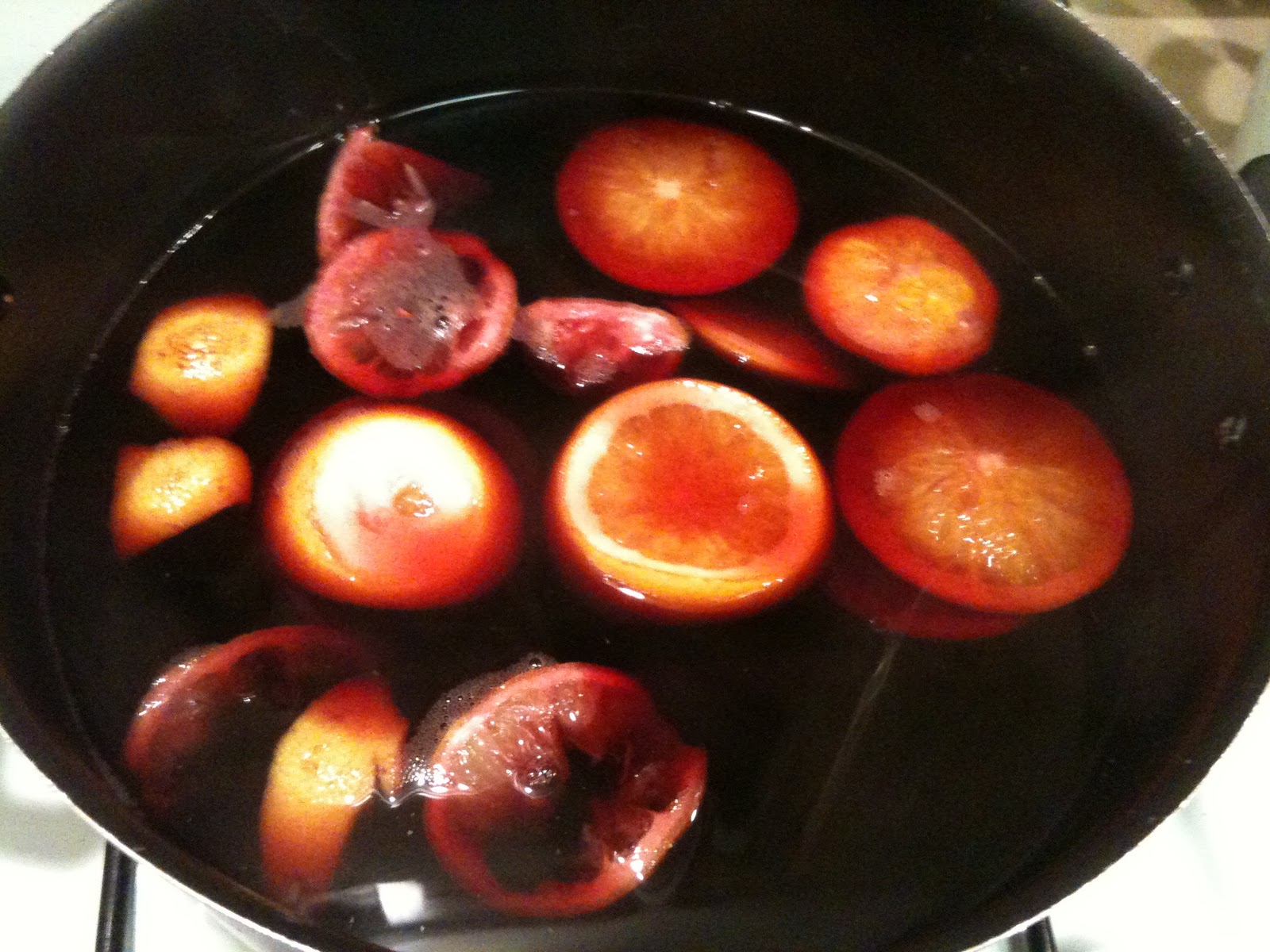
Mulled wine 
Heat 1.5 cups water, add bottle of red wine, add 3 cinnamon sticks and 4 cloves, add thinly sliced small orange and lemon, add a couple drops of vanilla, simmer for 3 minutes and serve! 


Yum!

Now off to Sunday morning practice!

Friday, October 22, 2010

Redesigning cafeterias

I was so excited to see this article in the New York Times today: how to redesign school lunchrooms to promote healthier eating. It's not about taking away the junk foods. Rather, it's about how simply redesigning cafeterias leads to healthier food choices. 

For example:
  • Make healthy foods (like broccoli) the first thing you see
  • Give food attractive names: Instead of “corn" call it “creamy corn”!
  • Provide choices: Offer students a choice of carrots OR celery (not only carrots)
  • Keep ice cream and desserts in closed containers so they're not easily visible
  • Encourage tray use: This increases veggie and decreases ice cream consumption
  • Decrease the size of bowls
  • Move chocolate milk behind regular milk 
  • Put apples and oranges in fruit bowl rather than a stainless steel pan (this makes it more appealing)
  • Verbally offer students a salad (and more will say yes)
  • Move the salad bar in front of the checkout (instead of off against a wall)
  • Have student pay cash for desserts (instead of using lunch tickets to buy them)
  • Make a “healthy express” check-out line for students not buying desserts or chips 
This is pretty much what my school lunches used to look like... yikes.

Thursday, October 7, 2010

Revolution Foods

“Let’s look at the school lunch program…We are essentially feeding them fast food and teaching them how to eat it quickly… lunch should be educational. Right now the school lunch program is a disposal scheme for surplus agricultural commodities. When they have too much meat, when they have too much cheese, they send it to the schools, and they dispose it through our kids’ digestive systems. Let’s look at it in a different way. This should be about improving the health of our children.”
~ Michael Pollan (in an interview with Bill Moyers, November 28, 2008)

Check out this short video about a company called Revolution Foods, serving a new kind of school lunch:


The founders, Kristin Richmond and Kirsten Tobey, came up with the idea while in business school at Berkeley, motivated "by the idea of creating a healthier generation.”

Their company now serves almost 60,000 meals to mostly low-income students in 350 schools across the country!

The criteria for the food they serve:
  • No high fructose corn syrup
  • No trans fats 
  • Antibiotic and hormone free meat and dairy 
  • Local and organic foods preferred 
  • No fried foods 

The challenge: healthy food is more expensive. These meals are $3-4/meal, while the government currently only reimburses schools up to $2.75 per meal. This is certainly worth the investment though, especially considering how much money this will save in medical bills down the road. 

How about also bringing this idea to hospital cafeterias?

Monday, September 27, 2010

How's your health equation?

“Our nation's food choices have produced a population with widespread chronic illness and health care costs spiraling out of control. You cannot escape from the biological law of cause and effect -- food choices are the most significant cause of disease and premature death. We cannot win the war on these diseases by putting more money into medical interventions or drugs. We must unleash the disease-fighting artillery in our own kitchens.” ~Dr. Joel Fuhrman
That quote is from this article in The Huffington Post by Dr. Joel Fuhrman (a Penn Med grad, btw!). 

He brings up the importance of the ratio of micronutrients to macronutrients in our diet. 
  • Micronutrients: Vitamins, minerals, phytochemicals which contain no calories but are important for DNA repair, free radical deactivation, immune function, and more.
  • Macronutrients: Calories. They provide us with energy in the form of fats, carbohydrates, and proteins.
The higher the ratio of micronutrients to macronutrients, the higher the nutrient density of the food. Eating high nutrient density food prevents over-consumption. Conversely, eating low nutrient-density food leads to over-consumption as our body craves more nutrients. 

He provides a health equation, and argues that the nutrient density of your food predicts your future health: 

The Health Equation:  
Health = Nutrients / Calories

Here are two obvious ways we can improve our health equation:
  1. Eat more high-nutrient foods (high-nutrient, low calorie): i.e. leafy greens, colorful veggies, fruits, beans, nuts.
  2. Eat less low-nutrient density food (low-nutrient, high calorie): i.e. refined sugars, processed packaged foods.
And while food is extremely important, it's certainly not the only factor in our health equation... so I’m wondering how we can fit things like exercise, sleep, and stress-level into it? 

Thursday, September 23, 2010

Medical miseducation

If there was ever a time when doctors need to be as handy with a peeling knife as they are with a scalpel, this may be it. The draft version of the federal government’s 2010 Dietary Guidelines, which will be formally released in December, identifies obesity as the nation’s greatest public-health threat. It also notes the relationship of fast food (and physical inactivity) to unhealthy weight gain and emphasizes the importance of plant-based foods in the diet….
For many doctors, an uneasy relationship with nutrition starts as early as medical school. Long hours and ready access to fast food, often on the hospital grounds, tends to undermine students’ best dietary intentions,” said Dr. Robert F. Kushner, a professor at Northwestern University Feinberg School of Medicine, where he directs the Center for Lifestyle Medicine. “Even the ones who come in excited about eating well and exercise find that good habits are harder and harder to maintain as time goes on,” Dr. Kushner said.
~From this great article in the New York Times, Doctor's Orders: Eat Well to Be Well
I could not agree more. It is incredibly difficult to develop and maintain healthy eating habits in medical school and residency (long hours in the hospital, sleep deprivation, high stress levels, free unhealthy food all around us, and lack of healthy choices in the cafeteria). 

When doctors don’t eat healthily themselves (and are given little to no education in what this means), then how can they be expected to counsel patients effectively?

Wednesday, September 22, 2010

Bill Clinton's new diet

Last night, Bill Clinton talked with CNN’s Wolf Blitzer about his new plant-based (basically vegan) diet:


"I went on essentially a plant-based diet. I live on beans, legumes, vegetables, fruit, I drink a protein supplemement every morning. No dairy. I drink amond milk mixed in with fruit and protein powder, so I get my protein in when I start the day out. It changed my whole metabolism, and I lost 24 pounds. I got back to basically what I weighed in high school."
After having heart surgery and having his stents re-clog because of his high cholesterol levels, he started doing his own research (including work done by Dr. Cladwell Esselstyn at the Cleveland Clinic, Dr. Dean Ornish at the Preventive Medicine Research Institute, and Dr. Colin Campbell author of The China Study). 

Clinton learned that 82% of people who go on a plant-based diet (no dairy or meat of any kind) can heal themselves and clear up their arterial blockage.
“We now have 25 years of evidence, and so I thought, well, since I need to lose a little weight for Chelsea’s wedding, I’ll become part of this experiment. I’ll see if I can be one of those who can have a self-clearing mechanism. We’ll see.” 
This is huge to have someone like Bill Clinton being an advocate for a plant-based diet! (I'm wondering if he’s tried yoga yet?!)

Saturday, September 18, 2010

Is this too much?

Check out this commercial by the Physicians Committee for Responsible Medicine (PCRM) on the consequences of fast food:


Too much?

Friday, September 3, 2010

The 7 Conditions of Health?

I went to another free lecture at Essene the other night. This time it was by Macrobiotic expert Denny Waxman, whose book I have just finished: The Great Life Diet.

He talked about the 7 conditions of health as defined by the Macrobiotic founders George Ohsawa and Michio Kushi. They are divided into 3 categories: Physical, Mental/Emotional, and Spiritual. Here they are:

Physical:

1. No tiredness

2. Good sleep

3. Good appetite


Mental/emotional:

4. Good memory

5. Never be angry

6. Joyous and alert


Spiritual:

7. Endless appreciation/gratitude


I thought this was a pretty good list, but there were some things missing for me (friendship, love, community, laughter, learning).

I'm also not sure about #5: Never be angry. Never? I don’t get angry often, but when I do it’s usually for a good reason (in my opinion, at least)!

Does anything else seem to be missing for you on that list?

Thursday, August 19, 2010

3 reasons to kick my coffee habit

I’ve been doing a lot of my food shopping at Essene lately (my favorite new store). Last night they had a free public lecture about nutrition. Throughout the talk, the speaker kept saying don’t drink coffee, coffee is toxic, coffee is poison...

Finally someone put up their hand and asked “But why is coffee so bad???” My thoughts exactly!

He then gave 3 reasons:
  1. Coffee is highly processed (But what exactly does that mean, and why is that bad?)
  2. Coffee contains unregulated chemicals and pesticides (Unless you buy organic, which I don't right now)
  3. Coffee stimulates the adrenal glands, putting the body under stress and causing the release of stress hormones adrenaline and cortisol (This is why I drink it!)
Part of me intuitively agreed with him on these, but this still did not stop me from making a cup first thing this morning (though it did stop me from making a second cup!)

Tuesday, August 17, 2010

Prescribing veggies

Doctors are now prescribing fruits and veggies at local farmers’ markets. Check out this article in the NY Times last week if you haven't seen it yet.
Doctors at three health centers in Massachusetts have begun advising patients to eat “prescription produce” from local farmers’ markets, in an effort to fight obesity in children of low-income families. Now they will give coupons amounting to $1 a day for each member of a patient’s family to promote healthy meals.
Farmers’ markets can be a “hub of preventive health.”
“Can we help people in low-income areas, who shop in the center of supermarkets for low-cost empty-calorie food, to shop at farmers’ markets by making fruit and vegetables more affordable?” said Gus Schumacher, the chairman of Wholesome Wave, a nonprofit group in Bridgeport, Conn., that supports family farmers and community access to locally grown produce.
If the pilot project is successful, Mr. Schumacher said, “farmers’ markets would become like a fruit and vegetable pharmacy for at-risk families.”
The key will be to make it easy for people by bringing farmers' markets into hospital cafeterias, doctors' offices, schools, and churches. Speaking of which, I was so happy to walk into our hospital cafeteria the other day and see this: A table dedicated to produce from local farms!

Perhaps one day doctors will even be able to prescribe farm shares, so that fresh fruits and vegetables can be directly delivered to people each week. 

Sunday, August 15, 2010

Good news in the medical world

The Dean Ornish lifestyle change program will now be covered by Medicare (article here, CMS decision memo here). This hopefully means we'll be seeing more diet and exercise programs pop up around the nation, and people will be able to afford them.

Below (or link here) is a 3-minute Ted Talk where Dean Ornish talks about the pandemic of cardiovascular disease, diabetes, high blood pressure, and obesity, and how these diseases are reversible through diet and lifestyle in 95% of people. He also talks about how prostate cancer can be reserved or stopped through diet and lifestyle. 

Tuesday, August 10, 2010

How acidic is your diet?

I've heard people (especially yogis) talk about wanting to eat a low-acid diet but never really paid much attention until recently. Then this article piqued my interest, about how a low-acid diet might help prevent osteoporosis.

How could a low-acid diet prevent osteoporosis? Our blood needs to stay within a neutral pH of 7.35-7.45. When the blood gets too acidic, calcium is leached from the bones in order to neutralize it. Too much calcium loss from the bones leads to osteoporosis. Different foods produce different amounts of alkalinity or acidity in the body.

Acid-producing foods include meats, beans, fish, cheeses, and grains. Foods with a high protein content leads to more acid production (especially animal proteins because of sulfurous amino acids). Coffee, tea, beer, wine, sugary foods (things we crave and become addicted to) all acid producing.

Alkali producing foods include fruits and vegetables. Even though lemons and other citrus fruits have acidic juice, when they are ingested they actually have an alkaline effect (result of the potassium and magnesium present).

The typical American diet is highly acidic: meat, dairy, sugar, alcohol, and coffee, while low in fruits and vegetables. A low-acid diet is high in fruits and vegetables, and low in animal protein.

Some are beginning to suggest that it may actually be the consumption of too much meat and animal protein (including dairy) that explains the high rates of osteoporosis in America. Even though dairy products contain calcium, they may actually end up weakening our bones because of their acid-producing effect. Research like this is surfacing, showing that there is insufficient evidence to recommend dairy to children for bone health.

My own doctors have always recommended dairy products to make sure I get enough calcium, but have never talked about the effects of a low or high acid diet on my bones. Have yours? I'm wondering if/how this might start to change over the next few decades.

Friday, August 6, 2010

Are we feeding our own cancer cells?

If you eat a lot of fructose (which most of us do), the scary answer might be yes.

There is a lot of fructose in the American diet, as high fructose corn syrup (HFCS) has infiltrated our grocery stores. The consumption of high-fructose corn syrup has actually risen 1,000% from 1970-1990.

This study just came out showing that fructose actually stimulates the growth of pancreatic cancer cells (CBS news overview here).

Fructose is taken up by cancer cells and used to make new nucleic acids, which are the building blocks of cell growth and proliferation.

The authors of this study write:
“Fructose is a particularly significant dietary sugar component with important implications for patients with cancer, particularly given the significant dietary change that has occurred in human fructose consumption since the mid- 20th century. Our findings provide important insights into recent epidemiologic studies that have identified refined fructose as an independent risk factor for pancreatic cancer, and identify fructose-mediated actions as a novel therapeutic cancer target.”
When I checked the ingredient list on my packaged foods at home, I was shocked at how much had high fructose corn syrup (HFCS) in it... even my "healthy" whole-wheat bagels and my seemingly innocent ketchup and BBQ sauce.


Can decreasing the amount of fructose in our diet inhibit cancer growth? This is the question we need to research now. 

Eliminating HFCS is essentially what the Ornish diet does when they recommend a whole foods, plant based diet. Some preliminary studies show that this diet, along with exercise and stress reduction, may have some effect on the progression of prostate cancer (in addition to reversing atherosclerotic disease).

How much HFCS are hospitals serving patients? I wish we could say zero. I’ve been thinking a lot about Ben’s post and could not agree more that hospitals should provide nutrition labels on their food.

If you’re interested in learning more about this fructose issue, here’s a post and “mini-med school lecture” about it. I’m sure this is something we’ll be hearing more and more about. 

Saturday, July 31, 2010

Easy weight control: Keep meat off your plate

Eating meat may lead to weight gain, and this recent study provides the data (check out the NPR story here).

They looked at the association between meat consumption and weight gain, following 103,455 men and 270,348 women for 5 years.

3 important findings from this study:
  1. There is a strong link between weight gain and meat consumption, even after controlling for variables such as total calories, weight, age, sex, and physical activity.
  2. A diet that contains 250 grams of meat per day leads to 4 pounds of weight gain after 5 years.
  3. Red meat is not the only culprit: weight gain is most strongly correlated with poultry consumption (which people tend to think of as the lower fat/ healthier meat option).  
Conclusion:
  • Decreasing meat consumption (all types of meat) may help with weight management. High animal-protein diets will most likely not lead to long-term weight loss.

All I can think about is the massive amount of meat that we serve sick people in our hospitals and children in our schools. How much evidence will it take for us to actually start changing this?

Sunday, July 25, 2010

What I wish we learned the first day of school

“If we could give every individual the right amount of nourishment and exercise, not too little and not too much, we would have found the safest way to health.” 
~ Hippocrates
So simple and so true. I wish we learned this the first day of medical school. Better yet, I wish we all learned this the first day of elementary school.

I think this is one reason why people like yoga so much. While everything else in life has gotten so complicated, yoga is a simple prescription for health based on the right amount of nourishment and exercise.

Monday, July 19, 2010

Experimenting with food

The Hatha Yoga Pradipika (chapter 1 verse 64) says the following:

"Wheat, rice, barley, shastik (a kind of rice), good corns, milk, ghee, sugar, butter, sugarcandy, honey, dried ginger, Parwal (a vegetable), the five vegetables, moong, pure water, these are very beneficial to those who practice Yoga."

I'm not sure how well this verse applies to my life, but it is certainly true that my interest in food has increased along with my yoga practice. What is good food to eat? How will eating certain foods make me feel? Which foods support the intensity of the ashtanga yoga practice (as well as other physically and mentally demanding activities)?

A lot of times I turn to my yoga teachers with these questions, but something John Campbell said last weekend made me think differently. He said something like,

"People over-relied on Guruji for questions on how to live their lives (What should I wear? How fat or skinny should I be?) Don't ask your guru questions that you should figure out yourself."

Just as experimentation is important for the physical asana practice, we should be experimenting with food. How else do we figure out what we like? What works for one person may not work for someone else.

For me, my general food criteria include the following:
  • Simple and easy to prepare (does not require fancy kitchen equipment or ingredients I don't typically have)
  • Efficient use of time (can make large amounts to be eaten over several days)
  • Made from local and fresh foods (for the most part)
  • Energizing (does not cause post-consumption mind-fog)
  • Nutritious
  • Tasty
  • Portable (can easily pack in bag and bring to work) 
Most importantly, I like leaving lots of room for experimentation... which is how I discovered this:

***Kale Banana Smoothie***
Blend handful of kale, a banana, yogurt, water, ice (and whatever else you think might be good!)
Perfect post-practice. 
Make lots, keep in the fridge, and look out for kale stuck in teeth.

Thursday, May 27, 2010

Urban farming

“The problems that exist in the world today cannot be solved by the level of thinking that created them” 
~Albert Einstein

One reason I am falling in love with Philadelphia: the new way people are thinking about food here.

In the latest issue of Philly's Grid Magazine, they had this great article (page 11) about urban farming and the success of Will Allen in Milwaukee. This is what Allen had to say about it:

“We can create thousands of jobs with this new kind of farming, with urban agriculture. Just think of all the categories of jobs: you’ve got installers, carpenters, plumbers, truck drivers, accountants, electricians, aquaculturists, planners, architects. In a rural area, you don’t need these jobs. Industrial agriculture gets rid of jobs; the machines do everything. This is hand work, it’s communal work, which is important and fun for all of us, all the generations, from little kids to school-age kids to teenagers to college kids. Everybody is involved.”

Jobs, healthy locally grown foods, community-building.... how can we not do this?

(For more, check out this great NY times article about Will Allen)